
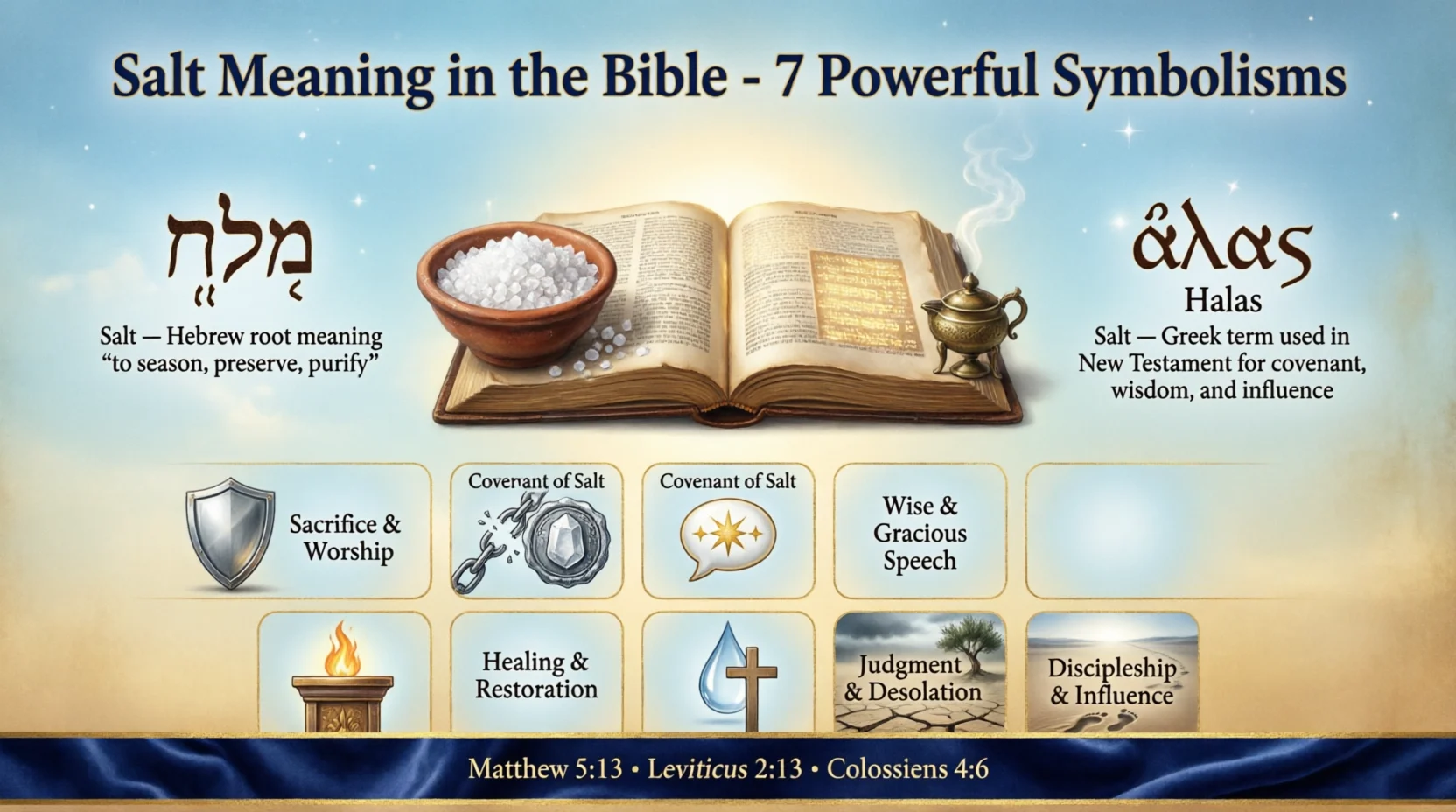
Have you ever wondered about the salt meaning in the Bible and why this simple substance appears so often throughout Scripture?
Salt may seem ordinary, but in biblical times it carried deep spiritual significance. It was used for preservation, purification, covenant agreements, worship, and daily life. Because of its importance, God used salt as a powerful symbol to teach spiritual truths that still apply today.
Whether you’re studying Scripture, seeking spiritual insight, or exploring biblical symbolism, understanding the meaning of salt can reveal profound lessons about faith, character, and your relationship with God.
Let’s explore the rich biblical meaning behind this remarkable symbol.
What Does Salt Mean in the Bible?
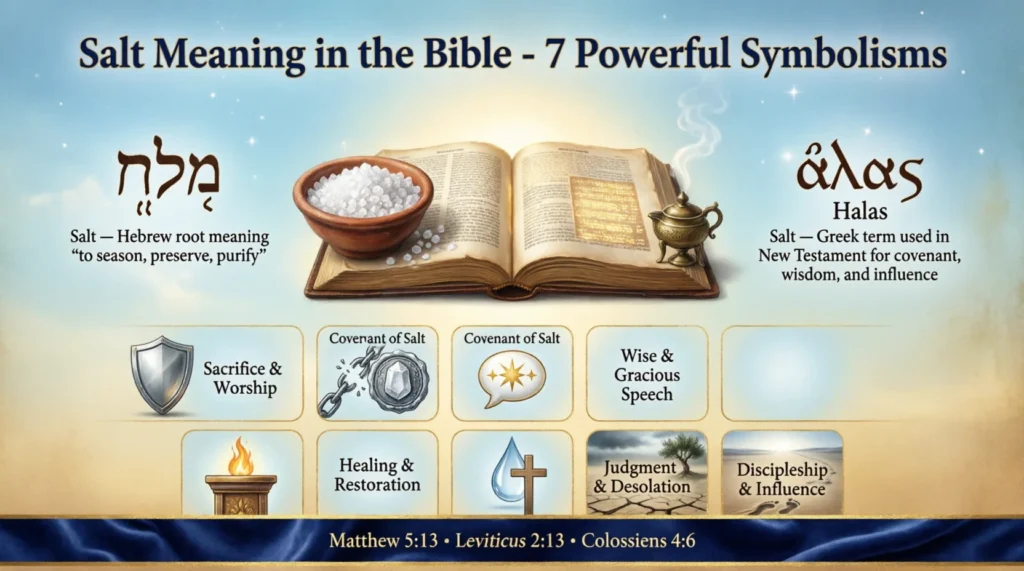
The salt meaning in the Bible is closely connected to preservation, purity, faithfulness, wisdom, and covenant relationship with God.
Throughout Scripture, salt represents something valuable that protects against corruption and preserves what is good. Just as salt prevents food from spoiling, God’s truth helps preserve believers from spiritual decay.
Salt also symbolizes commitment, loyalty, and the enduring nature of God’s promises.
Biblical Symbolism of Salt
1. Salt Represents Preservation
One of the primary biblical meanings of salt is preservation.
In ancient times, salt was essential for keeping food fresh. Spiritually, this points to God’s ability to preserve His people and protect them from moral and spiritual corruption.
Believers are called to influence the world positively and maintain godly values in a changing culture.
2. Salt Symbolizes Purity
Salt was often associated with cleansing and purification.
Its purity made it a fitting symbol of holiness and righteousness. The Bible frequently connects purity with drawing closer to God and living according to His will.
This symbolism reminds believers to pursue clean hearts and pure intentions.
3. Salt Represents Wisdom
Jesus taught that His followers should be “the salt of the earth.”
This statement suggests that believers should bring wisdom, goodness, and godly influence wherever they go.
Just as a small amount of salt can change the flavor of food, one faithful person can impact many lives.
4. Salt Symbolizes Covenant Faithfulness
In Scripture, salt was connected to covenant agreements.
A “covenant of salt” represented a lasting and unbreakable commitment. Because salt does not easily spoil or disappear, it became a symbol of permanence and faithfulness.
This points to God’s unwavering commitment to His promises.
5. Salt Represents Value
In biblical cultures, salt was extremely valuable.
In some regions it was even used as a form of payment. This significance highlights how God values faithfulness, obedience, and spiritual integrity.
The symbolism reminds believers that their spiritual influence has tremendous worth.
6. Salt Symbolizes Sacrifice and Worship
Several Old Testament offerings included salt.
God instructed that offerings should not lack salt, emphasizing dedication, sincerity, and covenant relationship.
This teaches that true worship involves wholehearted devotion to God.
7. Salt Represents Spiritual Influence
Perhaps the most famous biblical reference comes from Jesus’ words:
“You are the salt of the earth.”
This powerful statement calls believers to impact the world through love, truth, compassion, and righteousness.
A faithful life can encourage, strengthen, and guide others toward God.
Different Biblical Scenarios Involving Salt and Their Meanings
Salt in Offerings
Salt added to sacrifices symbolized purity, dedication, and covenant faithfulness before God.
The Salt Covenant
A covenant of salt represented permanence, trustworthiness, and God’s enduring promises.
Jesus Calling Believers the Salt of the Earth
This highlights the responsibility of Christians to influence society positively and preserve biblical values.
Salt Losing Its Flavor
Jesus warned that salt without flavor becomes ineffective.
Spiritually, this reminds believers not to lose their commitment, faith, or godly character.
Lot’s Wife Becoming a Pillar of Salt
This dramatic event symbolizes the dangers of disobedience and longing for a life God has called us to leave behind.
Important Bible Verses About Salt
Matthew 5:13
“You are the salt of the earth.”
This verse teaches believers to be a positive spiritual influence in the world.
Mark 9:50
“Salt is good, but if it loses its saltiness, how can you make it salty again?”
This emphasizes maintaining spiritual effectiveness and faithfulness.
Leviticus 2:13
“Season all your grain offerings with salt.”
This connects salt with worship, dedication, and covenant commitment.
Numbers 18:19
Describes a “covenant of salt” before the Lord, symbolizing permanence and faithfulness.
Colossians 4:6
“Let your conversation be always full of grace, seasoned with salt.”
This encourages wisdom and kindness in speech.
Spiritual Lessons God Teaches Through Salt
Be a Positive Influence
Your words and actions can impact others more than you realize.
Stay Spiritually Pure
God calls believers to live with integrity and holiness.
Remain Faithful
Just as salt preserves, faithfulness helps preserve spiritual strength.
Value God’s Covenant
God keeps His promises, and believers are called to honor their commitments.
Share God’s Truth
Salt improves flavor; believers are called to bring hope, wisdom, and truth into the world.
Guard Against Spiritual Drift
Salt that loses its effectiveness reminds us to stay connected to God through prayer and Scripture.
Live With Purpose
Every believer has a unique role in God’s plan and can influence others for good.
What Should You Do After Learning About the Biblical Meaning of Salt?
Pray for Spiritual Growth
Ask God to strengthen your faith and character.
Study Scripture Regularly
The Word of God helps preserve spiritual health and wisdom.
Evaluate Your Influence
Consider how your actions affect those around you.
Strengthen Your Relationship With God
Spend time in prayer, worship, and fellowship.
Walk in Faithfulness
Stay committed to God’s calling and His promises.
FAQs
What is the main salt meaning in the Bible?
The main biblical meaning of salt includes preservation, purity, covenant faithfulness, wisdom, and spiritual influence.
Why did God use salt in sacrifices?
Salt symbolized purity, devotion, and the enduring nature of God’s covenant relationship with His people.
What does “salt of the earth” mean?
It means believers should positively influence the world through godly character, truth, and compassion.
What is a covenant of salt?
A covenant of salt represents a lasting, faithful, and unbreakable agreement before God.
Why did Lot’s wife become a pillar of salt?
This event symbolizes the consequences of disobedience and looking back toward a life God has instructed us to leave behind.
Is salt a positive symbol in the Bible?
In most biblical contexts, salt carries positive meanings related to preservation, purity, faithfulness, and spiritual impact.
Final Thoughts
The salt meaning in the Bible reveals far more than a common household ingredient. Throughout Scripture, salt symbolizes preservation, purity, faithfulness, covenant commitment, wisdom, and spiritual influence.
God uses this simple substance to teach powerful lessons about living a life that honors Him. Just as salt preserves and enhances, believers are called to bring truth, grace, and hope to the world around them.
May this biblical symbolism inspire you to remain faithful, walk in purity, and become a positive influence wherever God places you. ✨
descover more post
Redemption Meaning in the Bible 2026
Integrity Meaning in the Bible The Powerful Spiritual Truth …
Nissi Meaning in Bible The Powerful Hidden Message Behind 2026

Noah is a passionate Bible researcher and spiritual content writer dedicated to uncovering the hidden meanings within Scripture. With a deep love for God’s Word, he focuses on simplifying complex biblical truths into clear, relatable insights that anyone can understand.
Through BibleSecretz, Noah shares powerful interpretations, dream meanings, and spiritual messages designed to inspire faith, strengthen belief, and guide readers closer to God. His work reflects a commitment to truth, consistency, and heartfelt devotion.
Known for his hardworking mindset and attention to detail, Noah spends countless hours studying biblical texts, symbolism, and spiritual patterns to deliver meaningful, accurate, and impactful content.